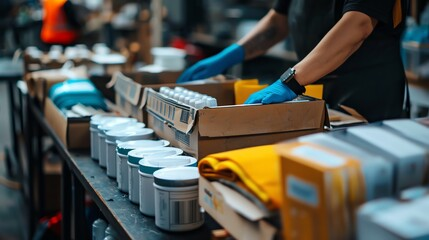
Kitting and assembly are critical fulfillment services that optimize supply chain operations. They streamline inventory management and reduce labor costs by grouping multiple individual SKUs into one consolidated package for shipping.
Kitting eliminates the need for warehouse workers to manually pick and pack each individual order, reducing handling time and eliminating errors. It also allows businesses to offer bundled promotions for increased sales and customer satisfaction. Visit Website for more information.
Cost-effectiveness
Kitting streamlines fulfillment processes, reducing manual touchpoints that drive up labor costs and raise the risk of errors. It also saves on packaging and shipping costs by consolidating multiple SKUs into one, unified package. For subscription eCommerce and retail brands that rely on curated bundles, like monthly box services, kitting can be a key differentiator in creating value-packed experiences that keep customers engaged, cultivating long-term loyalty.
By analyzing order patterns, 3PLs can identify frequently ordered product combinations and pre-assemble them into kits for efficient fulfillment. Kitting and assembly can also be used to manage diverse product ranges, eliminating waste by combining slow-moving inventory with bestsellers into a value-packed bundle that increases sell-through rates.
For products that need a high level of standardization or quality control, assembly is the most appropriate process. This allows for rigorous inspection and testing before the product ships to the consumer, minimizing customer returns and improving brand reputation. Additionally, assembling a kit before an order is placed ensures all components are in stock and ready for shipping, speeding up the fulfillment process.
Assembling a kit is a cost-effective strategy for businesses with limited storage space, allowing them to store a variety of items in one space instead of dedicating a separate shelf for each SKU. It’s also a great solution for businesses that require high levels of customization or need to minimize inventory costs. For example, a food wholesaler may use assembly to attach retailer-specific hangtags and region-specific pricing stickers on products before shipping them out. This enables them to deliver an unboxing experience that resonates with consumers and builds brand loyalty. This type of customization also helps brands increase product visibility, driving sales and brand awareness.
Customization
Kitting involves the aggregation of items for convenience in inventory and shipping, whereas assembly involves physically putting parts together. Both processes serve important roles in modern logistics but are used differently depending on the needs of the situation. A business’s choice of kitting or assembly services depends on factors such as product complexity, customization requirements, inventory management needs, and production volume. The benefits of these two critical manufacturing processes include optimized production outcomes, reduced logistical costs, and greater customer satisfaction.
The kitting process streamlines the subsequent assembly phase by eliminating the need for line workers to search for individual components across the warehouse. The components are logically grouped for expedite reading and identification, which saves time and effort. Clear labeling minimizes error, while efficient tracking systems ensure the right components are used in the final assembly. Once assembled, the kit is packaged and prepared for shipment, minimizing storage costs and packaging waste.
For e-commerce and retail fulfillment, kitting is a valuable strategic method for creating curated sets of products or bundling complementary items to drive sales. This value-added packaging offers a convenient shopping experience that enables customers to easily find the items they need and encourages repeat purchases.
Moreover, the streamlined assembly process allows businesses to deliver customized products and reduce overall logistics costs. For example, a kitting service provider may create custom bundles to match an upcoming holiday season or limited-time promotion. The resulting efficiencies and cost savings translate to a competitive edge for retailers and e-commerce retailers in the global marketplace. The future of kitting and assembly services will likely feature localized manufacturing, 3D printing, and blockchain technology. These advancements will facilitate on-demand customization, a significant boost in productivity, and improved traceability throughout the supply chain.
Efficiency
Kitting and assembly are essential to bridging the gap between manufacturers and consumers. These behind-the-scenes logistics techniques streamline e-commerce fulfillment and improve the customer experience. They also help to reduce inventory costs and increase shipping speed.
In a warehouse setting, kitting is the strategic grouping of components or products into cohesive units that are ready for subsequent assembly. The process minimizes assembly line downtime by eliminating the need for workers to search for individual components across a warehouse.
This technique is ideal for subscription box businesses that need to send curated sets of items in one package, as well as retailers offering promotional bundles to drive conversions and clear inventory. In addition, it reduces inventory costs by reducing the number of SKUs that need to be tracked and managed.
Effective kitting and assembly require a thorough understanding of the Bill of Materials (BOM) to minimize waste. It also requires a detailed understanding of inventory management to ensure that the right components are in the correct place at the right time. This is vital for minimizing the amount of Work-in-Progress (WIP) that accumulates in the warehouse and for maximizing productivity.
Kitting and assembly can be complex operations, particularly in an e-commerce environment where a high volume of orders may require customized packaging or special handling. This requires a 3PL partner with a deep understanding of e-commerce and a robust system for managing inventory. A good partner will also be able to provide flexible solutions and adjust their process as needed for maximum efficiency. For example, when Red Stag Fulfillment received a shipment of products that were missing an important component, the team was able to use kitting to create a solution quickly and cost-effectively.
Speed
Using kitting and assembly services to organize product components into ready-to-ship bundles streamlines the fulfillment process and reduces shipping costs. However, keeping up with these processes is often challenging without the right warehouse technology in place. This is where 3PL software comes into play, helping to automate the process and improve efficiency and accuracy. In addition, implementing automated quality control checkpoints helps ensure that every order shipped is accurate and complete. This minimizes customer frustration and strengthens brand loyalty.
Assembling products on demand also enables fast lead times for delivery and lowers inventory costs, as the company only makes a product when it receives an order. This flexibility is crucial for businesses that need to quickly respond to shifts in market demand and meet customer expectations.
Lastly, implementing kitting in your warehouse can help you optimize your inventory levels by grouping slow-moving items with bestsellers into value-packed bundles. This will boost sell-through rates and prevent the accumulation of dead stock. In turn, it will increase profitability and allow you to allocate more resources to growth initiatives.
Kitting is ideal for subscription box companies, allowing them to quickly assemble the curated set of products needed for each shipment. It is also useful for e-commerce sites that offer seasonal promotions or limited-time deals that require a quick turnaround time. Using warehouse technologies such as pick-to-light systems, conveyors, and automated guided vehicles (AGVs) can help to speed up the assembly process.
Kitting requires a high level of precision, which is why it is critical to partner with a logistics provider that has the right software and warehouse automation solutions in place. A leading 3PL will use advanced tools to track inventory and assemble kits in real time, increasing efficiency and reducing errors.
Responsiveness
In today’s dynamic business operations, efficiency and precision are key pillars of success. Kitting and assembly are two critical processes enabling these goals through strategic grouping of components into ready-to-ship packages, and the physical assembling of products before they are shipped directly to customers. These processes are becoming increasingly crucial to e-commerce fulfillment and direct-to-consumer (DTC) models, fueling the growth of third-party logistics (3PL) providers and contract manufacturing companies that specialize in them. They also contribute to demand for adaptable industrial space with warehouse layouts and material handling equipment optimized for these services.
Kitting combines various items into single, bundled SKUs for faster processing and less labor waste during order fulfillment. It also reduces storage costs by minimizing the amount of product that is kept in inventory. It also allows businesses to respond more quickly to changing market demands, as components can be assembled based on actual demand rather than forecasts.
The kitting process begins with a Bill of Materials (BOM), which serves as a blueprint for component selection. This step involves identifying and sourcing all the required parts and supplies for a given order, as well as creating an efficient tracking system to ensure that all necessary components are on hand during assembly. Once the BOM is complete, a team of skilled technicians selects the correct components for assembly and then places them in an organized layout that optimizes workflows. Quality checks are performed to verify that all components meet standards, and any subpar items are flagged for replacement or rework.
Assembling products enables businesses to customize orders and deliver a more personalized experience for their customers. This is especially important for curated subscription box services and other e-commerce bundles, as it elevates the presentation of products in their packaging and creates a more thoughtful unboxing experience. It is also beneficial for retailers who offer a wide variety of products and want to streamline the ordering and shipping processes.